Author
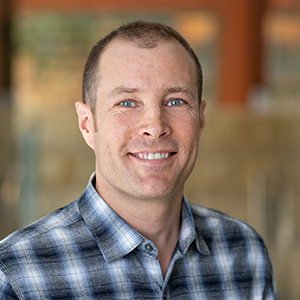


A presidential administration calls to offer a stint in public service. State officials want to make a food aid program work better. A journalist needs a smart take on today’s jobs numbers. The diverse résumé and research interests of Berkeley economist and Institute advisor Jesse Rothstein suggest he will pick up the phone, answer the email, open his office door—and do what he can.
But demand waxes and wanes for what Rothstein has to offer—namely, objective evidence on public policies intended to spread the benefits of growth and create a fair playing field for future generations. Lately, Rothstein said, “it’s been challenging to figure out how you do policy-relevant research when research evidence just isn’t the metric that matters” to many people in power. “There’s just less interest in, ‘How do we design complicated but well-functioning policy?’”
The former chief economist for the U.S. Department of Labor directs his copious energy where it can make a difference. This includes the University of California’s California Policy Lab, which Rothstein co-founded 10 years ago out of a desire to say yes more often when policymakers seek academic help. It includes a stream of research with Nobel laureate David Card that is reshaping our understanding of the labor market. It includes advising his Berkeley students as they step into an uncertain job market.
And on the side, he’s preparing a book he hopes will motivate the wider American public to face and to fix the uneven investment in the futures of our children. “We have to figure out ways to make sure the opportunities available to children from low-income families and high-income families aren’t too different,” Rothstein said. “There are talented kids who grow up in families that don’t have the resources to cultivate that. If we don’t give them a path out, then we’re losing out on that talent.”
Rothstein holds the Carmel P. Friesen Chair in Public Policy and the David Pierpont Gardner Chair in Higher Education at the University of California, Berkeley, where he is also professor of economics, director of the Center for Studies in Higher Education, and faculty director of the California Policy Lab. This interview has been edited for length and clarity.
Linking data for better government: 10 years of the California Policy Lab
There’s been plenty of focus lately on the quality and availability of federal economic data. But at the state level, the California Policy Lab has made some big strides in recent years. What have you been able to accomplish?
When I worked in the Obama administration, I was part of a big interagency initiative to try to do more program evaluation—to use the data that was coming in from federal programs to find out what was working. But ultimately most programs are run by the states. Even when the federal government pays for them, it’s usually not the federal government that has information about who’s being served or whether it’s working.
California has not been at the forefront of evidence-based policy over time. We saw an opportunity about 10 years ago to try to improve that. State agencies were coming to me and to my academic colleagues saying, “Hey, we’d love your help with figuring out how to make our programs work better.” The academics would say, “Yes, we’d love to help with that.” And then both sides would come to this gradual realization that what was involved was two years of negotiating a data-use agreement and setting up a process to allow for that collaboration. I saw myself saying no to things I would’ve liked to help with, just because I didn’t have the capacity to do the administrative work.
The California Policy Lab was a way to set up that administrative infrastructure—to negotiate agreements, to build relationships, to build computing infrastructure that could support collaborations between researchers and programs and agencies. We have now negotiated agreements with dozens of agencies, and many researchers throughout the University of California and beyond are working with those agencies. Researchers are taking on projects they might have otherwise passed on, and our government partners get the insights they need to improve programs and policies. This is also helping shift how policymaking happens in California, since we’re able to generate evidence about what works and what doesn’t.

Any wins you are especially proud of?
A common problem that agencies face is they have a program, but the people whom the program should benefit don’t know about it, or it’s harder than it should be to get signed up. So, we’ve done a number of “nudge” experiments and studies where we test interventions to make it easier for people to navigate the programs and to get the benefits that they’re eligible for.
Through this, thousands of people were able to access tax credit payments or Cal Grants (for higher education) or SNAP benefits (food assistance) that they were eligible for, but they didn’t know how to navigate the process. We think that’s just basic “good government” work. If the government is going to tell people about a benefit they’re eligible for, you’d much rather have them do it in clear language than in bureaucratese.
We’ve done a number of influential studies of criminal justice policies. There is an innovative program that gives people who have been arrested access to public defenders before their arraignments so that they have time to think about what the strategy should be. In the normal system, you often meet your public defender on the way into the room.
We showed that this change alone led to better outcomes for the defendants, that many of them were never prosecuted in the first place or were found not guilty when they would have otherwise been found guilty. These are people who shouldn’t have been convicted and shouldn’t have been forced into plea deals. After we published our evaluation, other counties reached out because they wanted to start their own programs, and state legislation was also introduced that would replicate the model in other counties. I think this is a win.
You have a lot of recent work about accessing the CalFresh program (the name for SNAP benefits in California) and in particular, access by college students. What’s the impetus for all the activity your team has devoted to that question?
College students increasingly are coming from nontraditional backgrounds. They’re struggling to eat while they’re in school, and that hurts their outcomes. Higher education institutions, as well as legislators and the Department of Social Services, were interested in, “How many students are we actually serving? How many students are we not serving who would be eligible?”
Nobody had linked the data on SNAP participation with college enrollment records. We were able to come in and say, “Well, that’s what we’re set up to do.” And we built this enormous linkage and have been studying this question ever since—again, because this is what the policymakers needed.
Firm quality and labor frictions: Breaking new ground with David Card
You’ve written many papers in the last couple of years with David Card (Nobel laureate and Berkeley economist). What have you learned from working closely with him?
He was my graduate school advisor, so I learned everything I know about how to do research from him. I don’t think this interview’s long enough to cover all of it!
The recent papers are with him and with Moises Yi, who’s actually an Institute visiting scholar this spring. There’s been a trend in labor economics in the last few years of more of the research focusing on Scandinavia, because they’ve put together better data systems than the United States. But one of the ways that we’re catching up is that the Census Bureau has put together something called the “Longitudinal Employer- Household Dynamics” database, which allows you to follow workers over time as they move from job to job.
We’ve been able to use that data to understand how jobs differ from each other, which is important to a realistic understanding of the labor market. In a traditional, standard economic model, it doesn’t really matter what job you have. There’s a set of jobs at which you’ll be productive—you’ll take one of them and they’ll all offer you the same pay. But, in fact, what you see in the data is that people who work for some firms earn a lot more than people who work for the other firms. It’s not because it’s different people. The same person earns more if they work for a high-wage-paying firm than a low-paying firm.
One of our papers shows that firms in some regions of the country pay more than firms in others. If you move from one region to another, your wages go way up or way down even though you have the same skills. That’s important: It suggests it’s something about firm productivity that is driving it, not just idiosyncratic differences across firms.
Similarly, another paper looked across industries and found that some industries reliably pay more than others, even to the same workers. If you move to a high-wage industry, you predictably get a big raise. These regional and industry pieces seem to be separate—you have high-wage industries and low-wage industries, and high-wage places and low-wage places, and they both vary within each other. That helps us get towards a fuller understanding of what’s driving these firm differences in pay policies, which I think are an important part of understanding how we improve worker outcomes.
How people end up in the jobs they do is so nuanced and complex—a matter of values and attachments, as well as location and people’s willingness to move. It seems like your papers are using the conventional tools of economics to try to untangle the sorts of path-dependence that are so important to outcomes in the real world.
And our new work shows there is path-dependence across generations, too. We’re getting close to a paper on the intergenerational transmission of job outcomes—whether growing up in a family where your dad or mom has a good job translates into the child having a good job as an adult. Also, if you live in a neighborhood where the other parents have good jobs, does that help you get a better job? We are working on disentangling the mechanisms by which advantage is transmitted from generation to generation.
Having a parent who worked at a good firm or having neighbors who work at good firms raises the chance that the child winds up with a job at a good firm. And it doesn’t do that by raising the child’s human capital. It seems to operate specifically through access to good firms. It suggests that there’s something about networks that really matters.
Something I’ve heard lately from talking with people who’ve been unemployed for a while is that they’re struggling with how much it matters “who you know.” That’s a different stage in life, a different situation than kids and their neighbors. But both kinds of networks represent frictions and inefficiencies in the labor market.
I’ll give another example. In a market economy, there are going to be some businesses that do well and some that don’t. And when the workers at those businesses lose their jobs, there’s growing evidence that losing your job is just really bad for you. In a frictionless world, it wouldn’t be—you’d just go find another job. But in the real world, it has long-term consequences for your earnings, for your health, for your general life outcomes.
We’re never going to get rid of the risk that some jobs go away. But we need to be thinking about how we do a better job of cushioning people against those risks and helping them not be so negatively affected. Unemployment insurance is one example. We now have clear evidence that the difficulty of finding a new job changes over the course of the business cycle—that it’s just much harder to find a new job in recessions. That’s an argument for having more generous unemployment benefits in recessions than we do at good times.
It’s a painful irony that the longer you’re out of work, the harder it is to find work. Beyond the personal cost, that’s a lot of lost potential for the economy.
Yes, it is. We don’t totally know how to help, but that ought to make it a high priority to figure it out. We ought to be experimenting with different programs to try to help people rather than just leaving people on their own.
Going big: Intergenerational poverty and a stronger safety net
You wrote an article a few years ago with Sandra Black, one of your fellow advisors to the Institute. You explored potential expansions of the U.S. safety net and social policies: universal child care, first two years of college free, widespread public provision of health and long-term care insurance. There’s a moral component to all of these, but you wanted to make the economic argument. What is the economist’s argument for expanding social programs?
Let’s start with child care and the first two years of college. Right now, we provide public K–12 education, and nobody really thinks we shouldn’t do that. We don’t tell somebody, you can’t go to high school if your parents can’t afford it. But over time, the education expectations of modern society have grown. Now we think that it’s not great for kids to just show up in kindergarten without having had any education before that. We also think it’s not great for kids to graduate high school and be told, “You have to find a job. There are no other options.”
The same arguments that led to us providing public K–12 school mean we should also be providing child care and college. It’s just historical path-dependence that we offer one and not the other. There’s good reason to think that if you don’t offer it publicly, parents will underprovide it and inequitably provide it, that some parents will be able to afford child care and college and other parents won’t. There will be kids who, it would be efficient for them to go to college, but they won’t go if their parents have to pay for it. That’s an economic argument for why it would be better for college to be freely available.
The counterargument that’s often offered is, well, we can just offer student loans and students can borrow to pay for their college. But we’ve seen in the last few years how that can go very wrong. It’s a big risk that students are taking on and the government is much better able to bear that risk.
Do you see market failures in each of these cases—underprovision of a public good, basically, by the private market—so that folks may be better off if government solves these?
Yes. Long-term care is another example—this enormous risk that we all face. There’s almost nothing that anybody can do to be ready for or to guard against needing care in our last years. There’s nothing efficient about making people cover it themselves— there’s nothing I can do to avoid the risk. There’s no moral hazard. There’s no adverse selection. It’s driven by your health needs, not by your choices, and nobody can predict who’s going to need it.
What ends up happening is some people build up giant retirement accounts that they probably will never end up using, but that they might need if they go into long-term care. And the standard advice to almost all middle-class families who wind up needing long-term care is to spend down all your assets so you can go onto Medicaid.
That’s a terrible thing to do to people, and there’s no need to do that. The only way to handle this is as a societal expense. It is expensive, there’s no question about it. But it’s not any less expensive when we force people to bankrupt themselves before they go on public benefits.
You were a part of the committee that produced a 500-page report from the National Academies in 2023, the consensus study on Reducing Intergenerational Poverty. This was requested by Congress to render some judgments on what policies work. What are your feelings on what that group accomplished?
We’re not right now at a moment where Congress seems poised to act on it. But when Congress decides it wants to do something about a problem, you’d rather have them pick a solution that works rather than one that doesn’t. I am hopeful that there will be a moment in the not-too-distant future when we really do want to rebuild American institutions and American opportunity, and the kinds of evidence in that report will be helpful for that.
The report is a reminder that many people have done a lot of research on these topics. We don’t have to throw up our hands and say, “We don’t really know what works.” There is a lot of evidence out there.
I think that’s right—we know a lot. We should act on that and build out the evidence for the missing pieces. I think there’s a particularly powerful argument that kids shouldn’t be held responsible for their parents’ circumstances. We do know that growing up in poverty is a clear cause of winding up in poverty as an adult. And that is a failure of our ability to provide equal opportunity.
There were certain categories where you found there was no convincing evidence. For example, “family structure.” That doesn’t mean, as I understand it, that this is not a meaningful mechanism. It’s just that there’s no research that provides any compelling evidence of what works.
I would say there’s research that provides evidence that kids who grow up in stable, two-parent families do better than kids who grow up in single-parent households. But we don’t have any policies that have been demonstrated to move kids from one category to the other. We couldn’t find any evidence.
What is the role of the Opportunity & Inclusive Growth Institute at this moment?
One important role is to recognize something that’s become clearer over time, that a single number like GDP growth does not capture how the economy is performing for Americans. As inequality gets higher, you can have GDP growth and still most people doing worse. It’s really important to understand whether people are included in that growth or not.
The Fed’s mandate is still about full employment and low inflation, and that’s as it should be. But it also needs to understand how GDP growth translates into those things. It’s not necessarily the case that GDP growth translates into full employment, for example, particularly in a world of AI coming in. It’s important for the Fed to be trying to understand these distributional effects.
You’re alluding to the “K-shaped economy”: increasing concentration of economic growth in AI, wealth growth for a smaller group of Americans. How do recent developments compare to the general progression of inequality over the past few decades?
I would say for 50 years we’ve had an environment where the economy was growing but median workers were getting little if any benefit from that. Real wages were falling quite short of economic growth. There have been a couple of periods during that 50 years when that wasn’t true—the couple years after COVID actually turned out to be one of them. But overall, there’s been this widening gap.
In the data, it’s hard to find objective evidence that things are so much more wrong now than they were a year or two ago. But it’s possible we’ve hit a tipping point where people are starting to realize all of these trends have been going on for 50 years, and are starting to incorporate that into their sentiment.
I think the long-run trend is a big problem. People have to have faith that we’re all in this together. When the economy is producing billions of dollars of wealth for some people and not making other people’s lives any better, it’s hard to have that faith. It’s important that we figure out ways to make sure that the growth is more broadly shared.
Jeff Horwich is the senior economics writer for the Minneapolis Fed. He has been an economic journalist with public radio, commissioned examiner for the Consumer Financial Protection Bureau, and director of policy and communications for the Minneapolis Public Housing Authority. He received his master’s degree in applied economics from the University of Minnesota.