Author

Sometimes, the best way to understand an idea is to meet the people who devote their time and energy to studying it. This series of short Q&As spotlights individuals whose research seeks to deepen our understanding of how economic opportunity and inclusive growth work in America today.
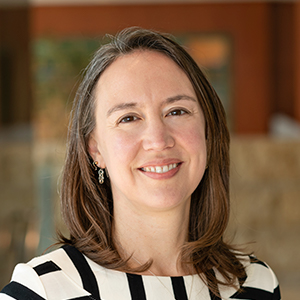
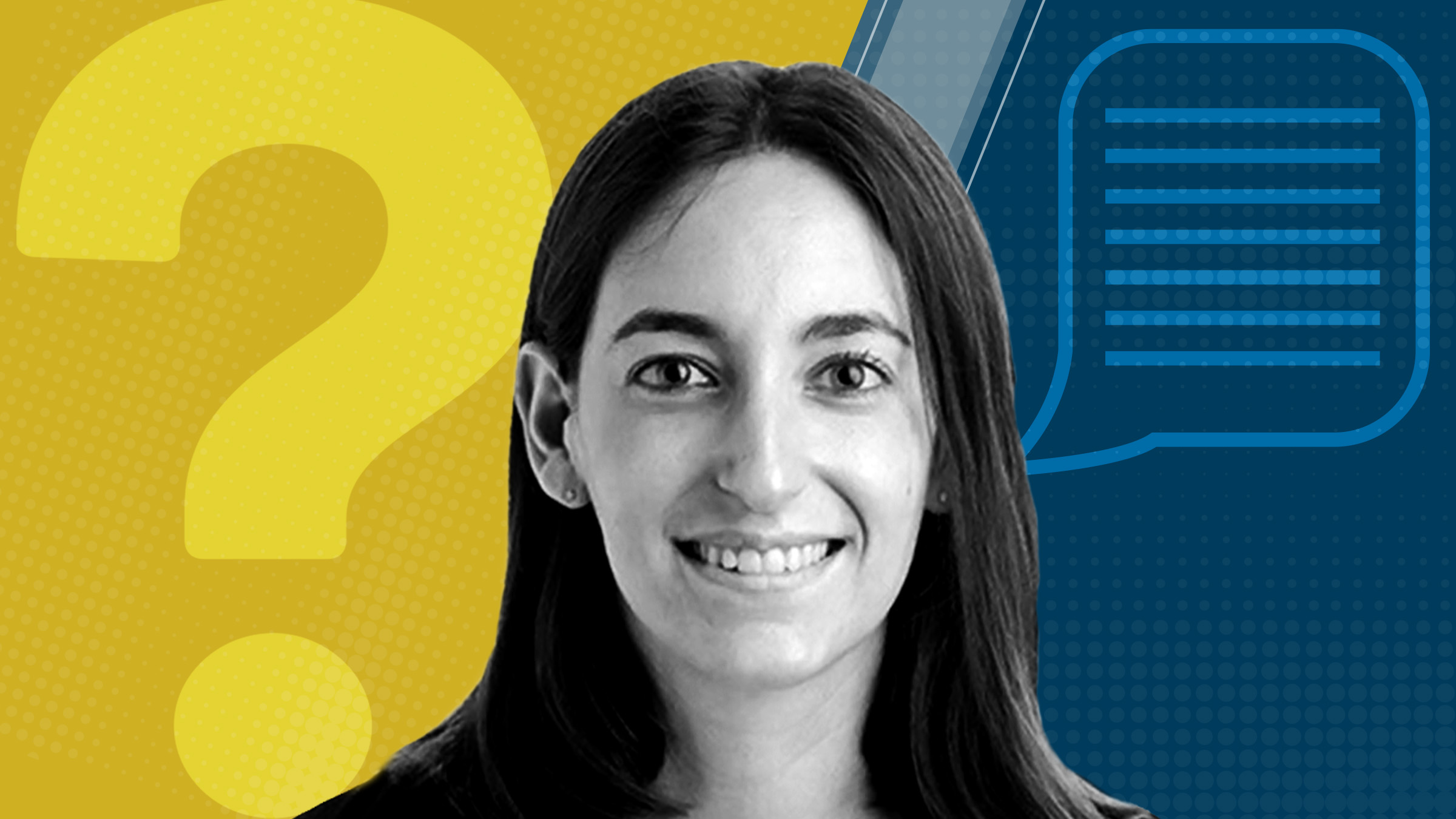
For this installment, we sat down with Opportunity & Inclusive Growth Institute visiting scholar Laura Castillo-Martínez, assistant professor of economics at Duke University, to discuss revealed preferences, how the timing of economic shocks impacts inflation, and resilience in the face of economic crises.
When did you realize you wanted to be an economist?
So the story here is I used to read the newspaper from back to front, and at least in Spain, there used to be TV programs [at the back], and then the next section of actual content was economics. I didn’t understand a single word, but that drove my curiosity to understand what it was. That was when I was probably 8 to 10 years old.
Then when I was a teenager, I was trying to figure out what I wanted to do with something that had a mix of mathematics and rigor and a structured way of thinking but also tackled real world problems. I’m very interested in people. So this was my way of bringing those worlds together.
I was also very influenced by the financial crisis—the Lehman Brothers collapse happened just before I graduated high school. Then when I finished my econ degree in Spain, the European sovereign debt crisis was a big thing. My first job, that was during COVID. So I’ve always been in the middle of a financial crisis. I think there’s a generational element there that has to do with my interest in economics, definitely.
In light of those economic crises, when you think about the fortunes of your generation going forward, does that make you pessimistic? Or are you optimistic?
I tend to be an optimistic person, or I try to be. I think resilience has been one thing that defines this generation. I think we’ve been badly hit by all of these crises, and after the crisis is a long slow recovery, and we never got back to where we were before. It’s never what we were promised, to some extent.
But I think at this stage, what we have developed is resilience on how to figure out life in these economic situations, which were probably not the ones that we expected initially. We’ll see if that resilience is going to be tested once again, but I do think that kind of buys you some optimism for the future, that you’re in a good position to tackle whatever comes.
What are you researching now?
I think of my work as having two different lines of research. One is inflation. The latest paper I have been working on tries to understand what drives inflation. There has been a lot of interest in how the size of the shock matters for how it translates into price increases, especially with the post-COVID inflation surge. I think what my co-authors and I want to contribute is that it matters not only what the shock is and the size of the shock, but the time at which the shock hits—the state of the economy at that time.
For instance, just after COVID the global supply chain disruption hit at the same time the economy was already facing pricing pressure. There had been some increase in fiscal spending and people had money in their pockets that they wanted to spend, but they weren’t able to do so. If an inflationary shock like the Ukrainian war then puts pressure on oil prices, that’s going to generate much more inflation than in 2019 when the economy was pretty stable. We’re trying to use models to help us see what variables in the data can tell us about how fragile the economy is to a new inflationary shock.
Then I have some papers on how the central bank should respond to inflation. Suppose a central bank has an inflation target. How should they think about policy to achieve that target?
The other line of research, which is entirely driven by my experience growing up in the financial crisis and more directly by the European sovereign debt crisis, has to do with firm dynamics—the entry and exit of firms. There has been a lot of literature thinking about firm exit as the result of a creative destruction process where recessions “clean up” unproductive firms—they should exit the market and this is something good for the economy.
My work tries to think a little bit more carefully whether there are frictions involved, meaning there’s issues with credit access that might make firms that look good on paper and would normally survive in good times actually have to exit because they don’t have funding. So basically, Which firms exit? Why are they exiting? And then the last part is, How does this contribute to recessions and the probability of growth after recessions?
How does your research relate to economic opportunity and inclusive growth?
Being a macroeconomist, when you think about inclusive growth, most of the time you think about consumer heterogeneity, how people differ and how they’re differently exposed to shocks. And I work with firm heterogeneity, so the link might not seem so direct. But if you think about it more carefully, I think firms are intermediaries between households or consumers and the economy. Take my paper on firm exit. Whether we have more or less of this inefficient firm exit, that’s going to determine what jobs are going to be available, where they are concentrated, and what your chances are of setting up a new firm and being successful. Firms are essentially going to determine access to jobs and what communities flourish.
What do you think is one of the most useful ideas in economics?
I think “revealed preferences” is one of my favorite ones, and it’s very intuitive. It says if you want to understand how people value different things, it’s better to observe their choices than to ask them. If you want to know whether people like coffee or tea at current prices, check what they’re consuming. And I like it because when you’re working with a lot of models like I do, it’s very easy to start thinking hypothetically. Revealed preferences help connect you to data. Actions speak louder than words, and revealed preferences are the economic way of putting that together.
What’s an important economic statistic that you think people should know, or one that has surprised you?
I’ve been spending a lot of time thinking about inflation and how inflation measures are constructed. And one of the things that I found fascinating was not a statistic exactly, but the finding that most of inflation is driven by housing.
But how are we measuring the price of housing? We use this idea of the “owner’s equivalent rent.” Since we don’t have a way of measuring housing prices directly if a house isn’t for sale, what the Bureau of Labor Statistics does is they ask homeowners if they were to rent their house, what would be the rent that they would require?
But there’s a delay. Housing costs go up and then slow down over time, but there’s a one-year gap between things moving in the housing market and people updating what their expectations would be in the rent market. Housing is one-quarter of the CPI [consumer price index], so how the cost of housing is imputed matters a lot. What is one unit of housing? How does housing quality come into play? When you hear about changes in prices you want to know if quality is changing too. How do you think about different numbers of bathrooms or amenities? All those things are really tricky, but I think they’re vital.
What is the best piece of advice you’ve received?
I have this written on my whiteboard at Duke: “Done is better than perfect.”
I think in academia there is a tendency to try to improve and polish things endlessly, and then they are never ready. And I think what I’ve learned over the last couple of years is that when work is out there—could be you’re sending the paper to conferences or you’re giving seminars or finally you’re sending it to journals—that’s when you really start receiving feedback. This helps you understand your paper better, understand the weaknesses, but also understand what are the main strengths. A paper that’s in your desk is not benefiting anyone, especially yourself.
If you could just wake up with a new skill or ability one day, what would it be?
I’d love to be genuinely funny, because I think it’s a sign of intelligence. You need to be able to, I don’t know, read the room, make connections where people are not making them, and just be good at timing. I also think that life is much easier if you’re able to make fun of yourself and things that happen to you, and then you’re also going to make everyone else’s lives happier. It’s a win-win.
If you had your own news station, what would you report on?
So this is a great question because I listen to the radio all the time. I do U.S. mostly when I’m in the car, but I still listen to Spanish radio programs, even though I’ve been almost 15 years away from home. I find it connects you to the real world. So there’s two things I would do. One is a copy of something that I listened to maybe 10 years ago and I loved. It was a program about entrepreneurs, the story of the idea and then the buildup of the team—how they had put together the team that had made the business successful. So it was not only about the entrepreneur or the owner, but about the whole set of people that work together.
The other thing I would do would be financial literacy for kids and teenagers. I don’t know how to make this successful, but that’s something that I feel is missing. But it’s important, because financial decisions are everywhere and we’re kind of never taught how to make them. It’s embarrassing how little I know about the pension system, being an economist.
This interview was edited for length and clarity.
Lisa Camner McKay is a senior writer with the Opportunity & Inclusive Growth Institute at the Minneapolis Fed. In this role, she creates content for diverse audiences in support of the Institute’s policy and research work.